Revolut RevPoints vs American Express - who are you taking off quicker with?

Introduction
This topic is a touchy one. It is not one to bring up at the dinner table unless you want everyone to quickly finish up their main meal so they can get out of there as soon as possible, or start an argument with those already in the know.
Two of the most benefits-packed cards in the Netherlands from Revolut and Amex both allow you to collect points on your spend, but it got me wondering: which points system am I actually going to benefit from most?
As a reminder, both of the core products used to collect points are fundamentally different. The difference being that these are two completely different types of cards: American Express is a credit card, and Revolut is a debit card.
I am assuming you know the difference and enough to know whether a credit card is suitable for your lifestyle or not. If not, go research it!
It is worth looking at the full offering in detail when it comes to deciding which comes out on top for you in the battle of Revolut Ultra vs Amex Platinum or even Amex Platinum vs Amex Flying Blue Platinum and so on.
Why is it a touchy subject? Because it is full of so many “ifs” and “buts.” Which scheme is most suitable for you fundamentally comes down to your personal spending velocity and travel habits. I am going to take you through my thinking in simple steps.
⚠️ To note: I am focusing entirely on redeeming my points on flights because that is where I get the most value for my lifestyle. I am not bothered about staying in a particular hotel chain or trading points for a gift voucher at a specific shop.
Collect points as you spend on your card
Below are the three main card tracks and the points currencies they collect when you spend in the Netherlands:
| Card Type | Point Type | Exchange to Redeem |
|---|---|---|
| American Express Flying Blue Card | Flying Blue Miles | No conversion needed. Spend, collect, and you are in the sky—but only on a SkyTeam flight. |
| American Express (Regular Cards) | Membership Rewards Points | Flying Blue + a smaller set of other airline partners, select hotel groups, and retail options. |
| Revolut Premium Plans | RevPoints | Multiple global programmes: Flying Blue, British Airways, Iberia, Qatar, Turkish, and more. |
So after deciding if a credit card makes sense for your personal situation in the first place, the next question to ask is: which points system makes sense to me? That is up to you to decide. But I have outlined my exact thinking process below.
Step One: Decide on Flexibility vs All-In on Flying Blue
I looked at my flying habits and realized I tend to decide on my trips quite last minute rather than planning far in the future. As I showed in my recent case study of flying to Japan as cheaply as possible, I gave myself a strict 30-minute window to book. By utilizing a multi-alliance strategy—combining both Flying Blue points and Avios points—it resulted in a return journey cost of just €272 return and 72.000 points.
I am going to use this exact example to help determine which points scheme actually holds up under pressure.
It works short-haul too: At the office in London for 08:30 ✈️🇬🇧
To see how this works on a quick short-haul run, let’s look at getting to London early morning. Using Google Flights, I searched for early morning flight costs to London City (LCY) from Amsterdam Schiphol.
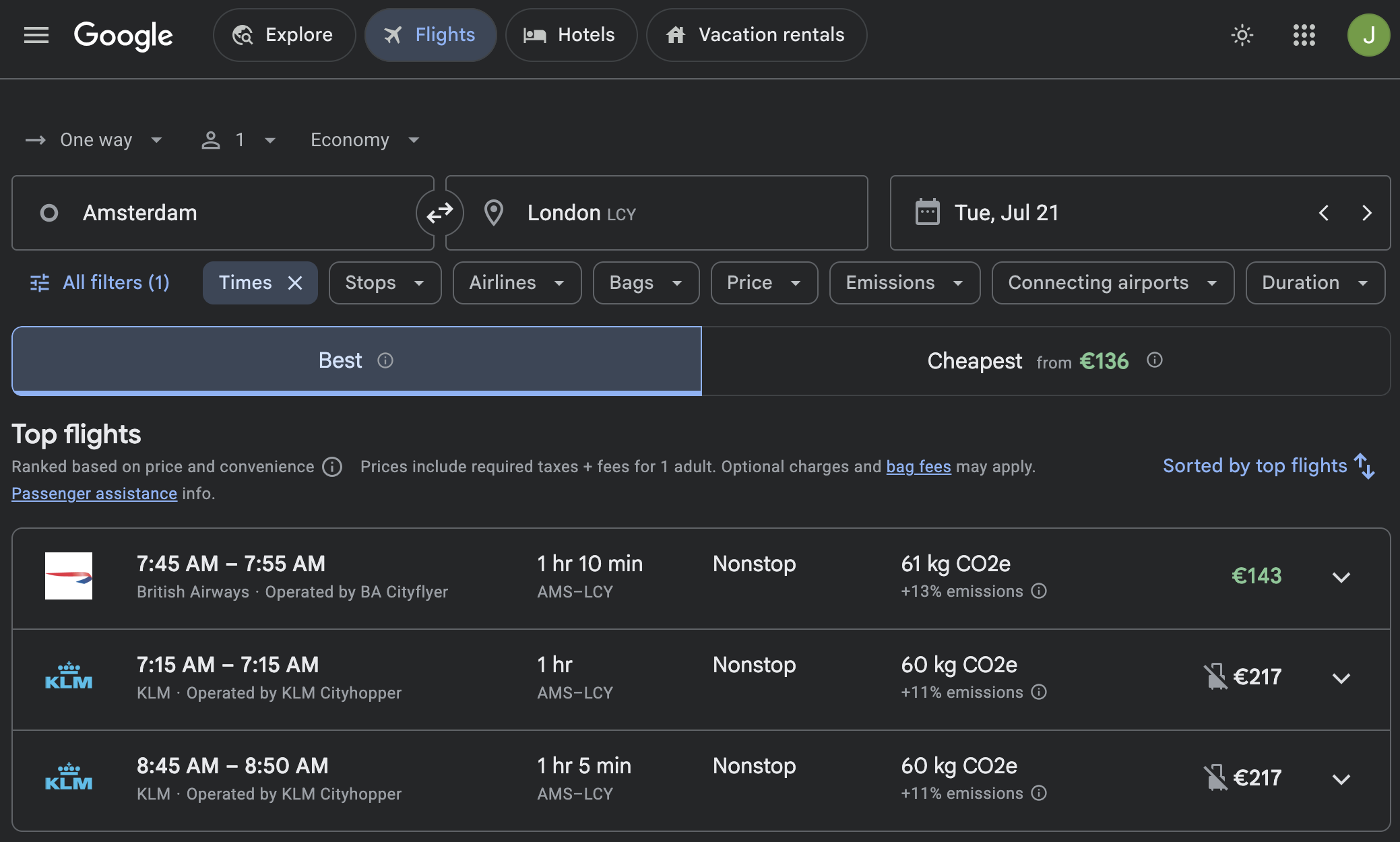
Both the BA and KLM flights work perfectly on time, but the BA flight is clearly already more affordable as a cash price. When we look at the points requirements, the difference becomes glaring.
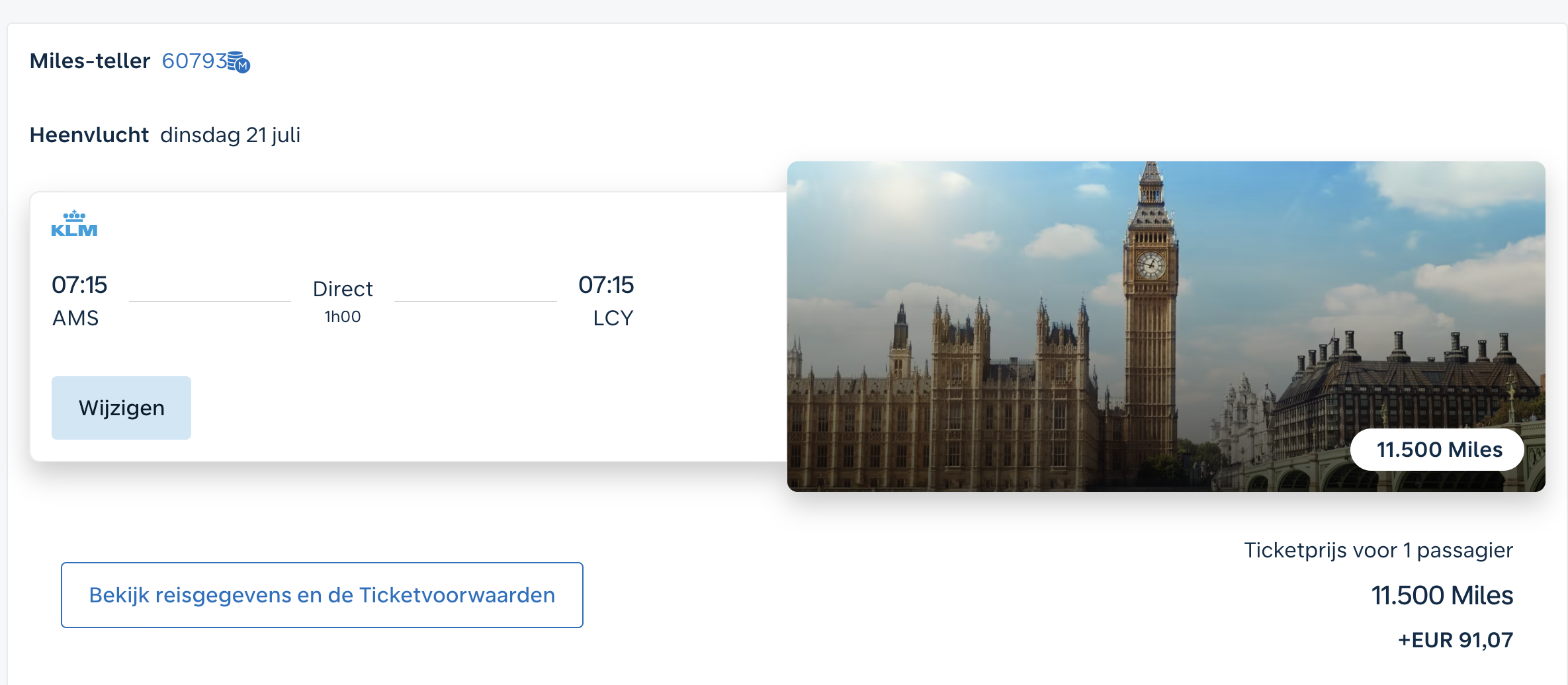
Checking the KLM website reveals this points and taxes cost for that specific flight:
Then I checked the British Airways website for the Oneworld alternative. It was not only fewer points required, but also significantly less cash out of pocket:
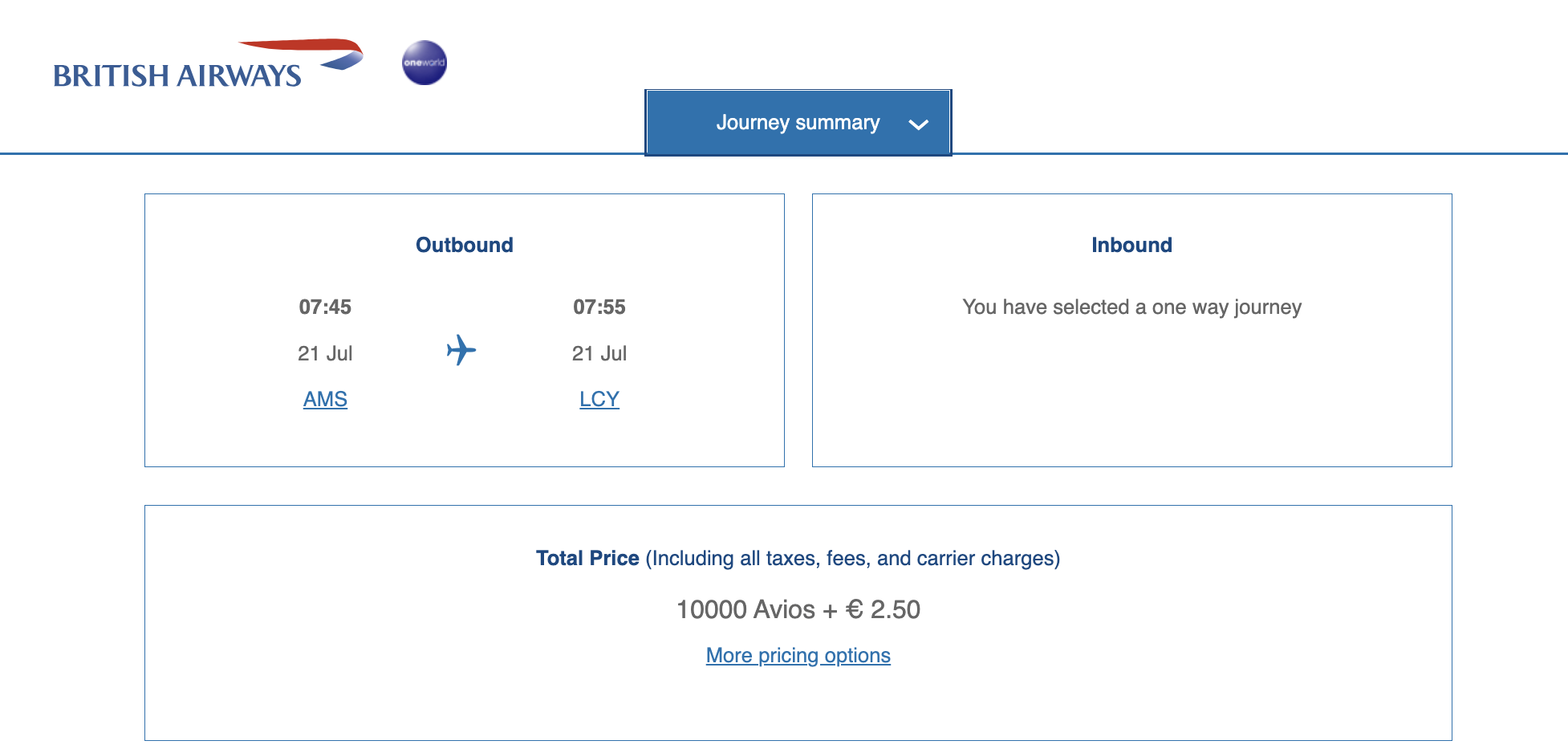
If you are locked entirely into Flying Blue, you could be forced to spend more points and more cash for the exact same morning commute. This is why point flexibility is often the true winner.
However, what is the actual value of a single card point? To understand the true value, you need to factor in your earning rate and see how quickly you can rack them up.
Step Two: Choose the Card Based on the Earning Rate (and Bonuses)
This gets a bit more complicated for RevPoints and Membership Rewards when you are focusing on flight redemptions, as you have to calculate the conversion ratios.
Let’s first look at the baseline earning multipliers per euro spent across the Dutch market:
| Product / Card Tier | Points Currency | Points per € Spent | € Spend for 10.000 Points |
|---|---|---|---|
| Flying Blue Amex Platinum | Flying Blue Miles | 1,5 | ~€6.667 |
| Flying Blue Amex Gold | Flying Blue Miles | 1,0 | ~€10.000 |
| Regular Amex Platinum | Membership Rewards Points | 1,0 | ~€10.000 |
| Regular Amex Gold | Membership Rewards Points | 1,0 | ~€10.000 |
| Revolut Ultra | RevPoints | 1,0 | ~€10.000 |
| Revolut Metal | RevPoints | 0,5 | ~€20.000 |
| Revolut Premium | RevPoints | 0,25 | ~€40.000 |
| Revolut Standard / Plus | RevPoints | 0,1 | ~€100.000 |
The Conversion Realities
1. American Express Membership Rewards
Here is what happens when you attempt to move your regular Dutch Amex points out to major airline programmes:
| Airline Programme | Transfer Ratio (MR → Airline) | 10.000 MR Points Becomes… |
|---|---|---|
| Flying Blue (KLM / Air France) | 2 : 1 | 5.000 Miles |
| British Airways Executive Club | 5 : 4 | 8.000 Avios |
| Iberia Plus (Avios) | 5 : 4 | 8.000 Avios |
| Singapore Airlines KrisFlyer | 5 : 4 | 8.000 Miles |
| SAS EuroBonus | 3 : 2 | 6.667 Points |
| Delta SkyMiles | 3 : 1 | 3.333 Miles |
| Cathay Pacific Asia Miles | 3 : 1 | 3.333 Miles |
In plain language: for Flying Blue you now lose a massive 50% of your value when you transfer (2:1), while most other alliance options “cost” you around 20% (5:4).
2. Revolut RevPoints
Now let’s look at the challenger infrastructure. When you want to shift your RevPoints out to transfer partners, the equation stays entirely flat:
| Airline Programme Partners | Transfer Ratio (RevPoints → Airline) | 10.000 RevPoints Becomes… |
|---|---|---|
| Flying Blue, British Airways Avios, Iberia, etc. | 1:1 | 10.000 Airline Miles |
On the sheer mechanics of converting card points to airline partners alone, Revolut wins hands down. But let’s not forget you have to earn those card points to convert them in the first place.
What if I focus only on Flying Blue redemptions?
Now we can combine the earning rate and the conversion rate, assuming you want to fly KLM both ways on the Japan example:
- Outbound: 30.000 Flying Blue miles (promo AMS → Tokyo)
- Return: 98.500 Flying Blue miles (standard Tokyo → AMS on your dates)
- Total: 128.500 Flying Blue miles needed for the full return journey
| Product Tier / Route Track | Flying Blue Miles per € | Spend for Outbound (30k FB) | Spend for Return (98,5k FB) | Total Spend to Earn 128,5k FB |
|---|---|---|---|---|
| 🏅 Flying Blue Amex Platinum | 1,5 | ~€20.000 | ~€65.667 | ~€85.667 |
| 🥈 Flying Blue Amex Gold | 1,0 | ~€30.000 | ~€98.500 | ~€128.500 |
| 🥉 Revolut Ultra → Flying Blue | 1,0 | ~€30.000 | ~€98.500 | ~€128.500 |
| Regular Amex Platinum → Flying Blue | 0,5 | ~€60.000 | ~€197.000 | ~€257.000 |
| Regular Amex Gold → Flying Blue | 0,5 | ~€60.000 | ~€197.000 | ~€257.000 |
| Revolut Metal → Flying Blue | 0,5 | ~€60.000 | ~€197.000 | ~€257.000 |
| Revolut Premium → Flying Blue | 0,25 | ~€120.000 | ~€394.000 | ~€514.000 |
| Revolut Standard / Plus → Flying Blue | 0,1 | ~€300.000 | ~€985.000 | ~€1.285.000 |
If life were always a clean “30.000 out, 30.000 back on KLM”, the story would pretty much end here and you could just go all-in on a Flying Blue credit card. But as I showed in the Tokyo case study, reality looks very different on the dates you actually want to travel.
What if I focus on mixed airline scheme redemptions?
Here is what happens when you copy my exact multi-alliance strategy to bypass the inflated return tiers:
- Outbound: 30.000 Flying Blue miles on KLM
- Return: 42.000 Avios on Finnair
- Total: 72.000 airline points (30.000 FB + 42.000 Avios)
| Product / Points Currency | Effective Miles per € Spent* | Spend for Outbound (30k FB) | Spend for Return (42k Avios) | Total Spend to Earn 72k Points |
|---|---|---|---|---|
| 🏅 Revolut Ultra (RevPoints) | 1,0 (1:1 to FB/Avios) | ~€30.000 | ~€42.000 | ~€72.000 |
| 🥈 Regular Amex Platinum (MR) | 1,0 (2:1 to FB, 5:4 to Avios) | ~€60.000 | ~€52.500 | ~€112.500 |
| 🥉 Regular Amex Gold (MR) | 1,0 (2:1 to FB, 5:4 to Avios) | ~€60.000 | ~€52.500 | ~€112.500 |
| Revolut Metal (RevPoints) | 0,5 | ~€60.000 | ~€84.000 | ~€144.000 |
| Revolut Premium (RevPoints) | 0,25 | ~€120.000 | ~€168.000 | ~€288.000 |
| Revolut Standard / Plus (RevPoints) | 0,1 | ~€300.000 | ~€420.000 | ~€720.000 |
*Effective airline points per € for this table represents how many raw points you earn per euro before converting them into Flying Blue or Avios.
The only area regular Amex Platinum clearly comes out on top is non-mileage travel benefits, specifically lounge guest access. If you regularly travel with a partner and value lounge entries above pure mile accumulation, that shifts the math. But on a pure points velocity scale, Revolut Ultra cuts your required spending footprint down significantly.
A last word on boosting and bonuses
American Express relies heavily on massive welcome point bonuses to get you to your goals faster. For example, I secured 70.000 MR when I signed up to the Platinum card and an extra 60.000 MR when introducing a friend. These rates fluctuate constantly based on seasonal campaigns, but they significantly cut down the time required to book long-haul luxury tickets. Revolut does not offer points for sign-ups, focusing instead on cash incentives for referrals.
When it comes to everyday boosting, your strategies split by ecosystem:
- You can boost Flying Blue balances locally using Air Miles at Albert Heijn (1 Mile per €2,50, then converted 2:1 into Flying Blue), shopping via the Flying Blue portal, or utilizing partner networks.
- You can boost RevPoints via daily card challenges, using Uber rides, tracking Thuisbezorgd deliveries, or using in-app shopping multipliers—then converting them 1:1 into whatever programme makes sense when you know where you are going.
Those dynamic “boosts” deserve their own dedicated breakdown. This post was about the core engine: how fast each card builds points, how brutal the conversion rates can be, and what that looks like when you price out a real-world ticket like Amsterdam to Tokyo. For me, the answer wasn’t picking one fixed scheme. I took what I could from both, kept my points flexible, and ran with it!
If you want to try out Revolut and start earning flexible RevPoints on 100% of your daily Dutch spending, you can support this blog by signing up through my official referral link here.